Stay in the loop.
Get stories of impact, member news and ways to take action, straight to your inbox.
Because of the ongoing U.S. federal government shutdown, the funding that normally supports Supplemental Nutrition Assistance Program (SNAP)—formerly known as food stamps—has lapsed. Nearly 42 million people, or about one in eight Americans, rely on these benefits to help feed themselves and their families.
As the shutdown continues, states and food bank networks across the country are declaring emergencies and stepping in to provide emergency food assistance. The gap in SNAP benefits is raising serious food insecurity concerns nationwide, as many households suddenly find themselves without this vital safety net.
Food banks are community-based organizations that collect and distribute food to people in need, often working with local pantries, schools and shelters. They play a critical role during crises like this, when millions face uncertainty about where their next meal will come from.
Yes. Most food banks are open to anyone in need, especially during emergencies like the government shutdown. You typically don’t need to be receiving SNAP benefits to qualify. Some food banks may ask for basic information such as your ZIP code or household size, but their mission is simple: to ensure no one goes hungry.
Each food bank sets its own guidelines, but most prioritize accessibility and dignity. To receive assistance, you may need to bring identification or proof of address—but many will serve anyone who asks, especially during this crisis.
If you’re in a position to help, now is the time.
In this time, as always, we are stronger together.
Visit our Environmental Partner Directory to find and support approved food banks.
Don’t see a food bank local to you? Members can recommend a food bank for certification and help expand our collective impact.
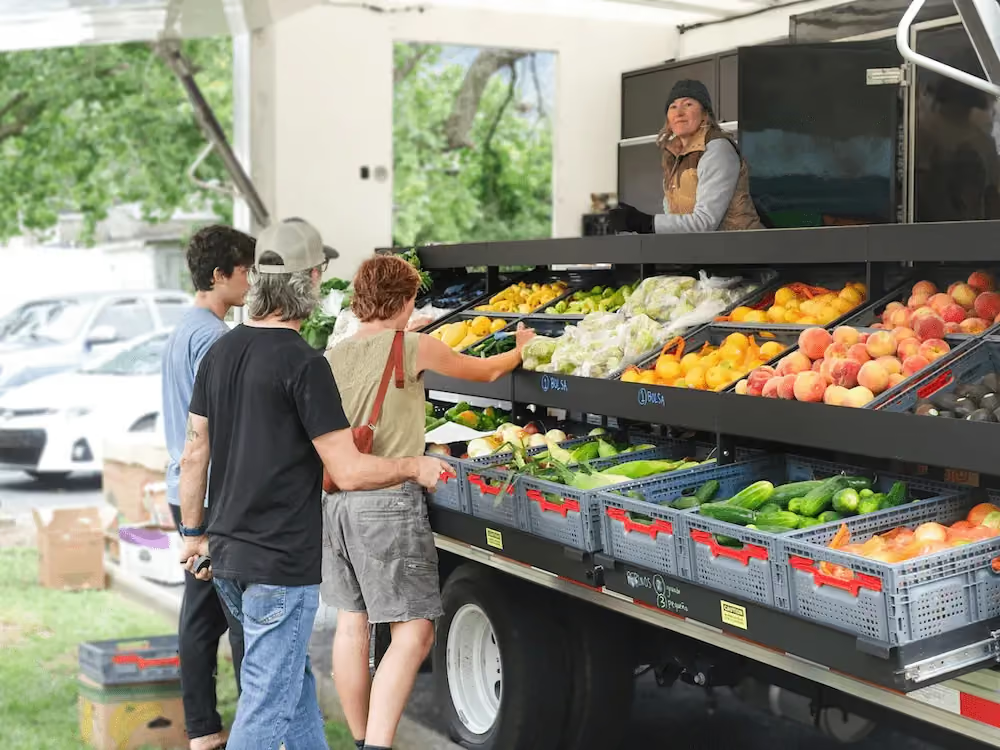
Header image by Bounty & Sol.
Read more: