Stay in the loop.
Get stories of impact, member news and ways to take action, straight to your inbox.
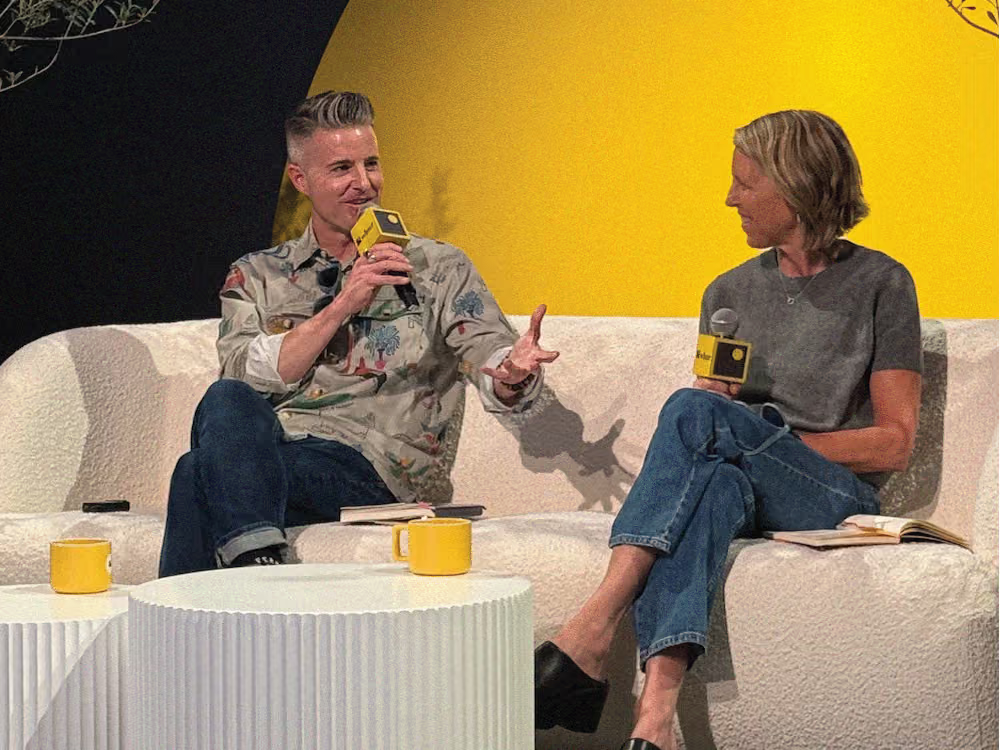
Stephen Lease, CEO of goodr, talked about his company’s 1% for the Planet membership on stage at WBUR Festival in May 2026.
Your leaders have a 1% for the Planet story worth telling. Here’s how to make the most of it.
You've done the work. You've committed 1% of annual revenue to fund environmental solutions. You've supported vetted impact partners doing critical on-the-ground work so our planet and future generations can thrive. And you’ve had those contributions certified every single year by your accountability buddy (that’s us!).
So now what? The question isn’t if you should share this story with the world. Doing so bolsters your brand, brings new ones into the 1% for the Planet network, and helps grow the impact of the wider “business for good” movement. As 1% for the Planet CEO Kate Williams wrote in a Fast Company Executive board piece, “When businesses share their stories, it allows others to see what’s possible and puts positive pressure on them to step up.”
No, the real question is how you’ll talk about it.
There is no shortage of options: Your 1% for the Planet story clicks for audiences when they see it integrated across retail displays, in your ad campaigns and throughout your content channels.
But there’s another, often-underutilized channel that we’ve seen be particularly powerful for brands in the 1% for the Planet network: executive thought leadership.
Executive thought leadership is like a Trojan Horse for building brand trust. Your spokesperson grows an audience by sharing insights and points-of-view that are unique to them and their experience. That audience finds these offerings valuable and starts looking to them as a trusted leader of an industry or movement. And by proxy, these people trust your brand and become a new audience in your ecosystem.
By many measures, executive content is more effective than brand-owned content. For example, executive posts on LinkedIn garner 600% more reach on LinkedIn, and 64% of buyers find thought leadership content to be “a more trustworthy basis for assessing” a company’s capabilities than the brand’s marketing materials.
For leaders in the 1% for the Planet network, in particular, there is also the opportunity to inspire peers to follow suit when talking about 1% for the Planet membership. If a CEO says something like, "We joined 1% for the Planet because accountability matters to us," it could be the final thing a fellow CEO or founder needed to hear to finally commit to environmental action.
Sometimes an executive spearheaded 1% for the Planet membership themselves and can wax poetic about its merits all day long. Sometimes it’s up to the impact or marketing team to make sure all spokespeople are up to speed on the details of your 1% for the Planet membership so they can easily and confidently speak about it in any public setting. The good news is that it's super simple.
We recommend developing five or so approved talking points about your 1% for the Planet membership to roll out to the entire team, with particular attention paid to prepping spokespeople with this info.
It’s not about reciting these verbatim. (In fact, don’t try that. It’ll likely fall flat.) Focus on having spokespeople know these key details well enough that they are able to speak to them naturally and personally.
Thought leadership lives wherever your C-suite is interacting with the world. Your leaders have a strong impact story to tell, so make it travel across all of their touch points:
Your impact story already has all the ingredients for great thought leadership: a meaningful commitment, a personal connection to the “why,” measurable outcomes, interesting partnerships, and hard-won learnings your peers and aspiring leaders are hungry for. A few tips to help you tell it well:
Not yet a member? Let’s talk.